Our workshop
We make enamel in the town that made the nation's teacups
Kilnmarsh started in 2016 in one unit of a former pottery yard in Longton. It is now nine people, one press, two dip tanks and a kiln, making about 1,400 pieces a week.
Why enamel, and why here
Stoke-on-Trent has fired clay for three hundred years. The bottle kilns are mostly gone, but the skills are not: glaze chemistry, kiln work and the patience to check ten thousand rims a month. When Nell Barratt and Sam Okafor left a tableware factory in 2015, they wanted to use those skills on something that would not break when it hit the floor.
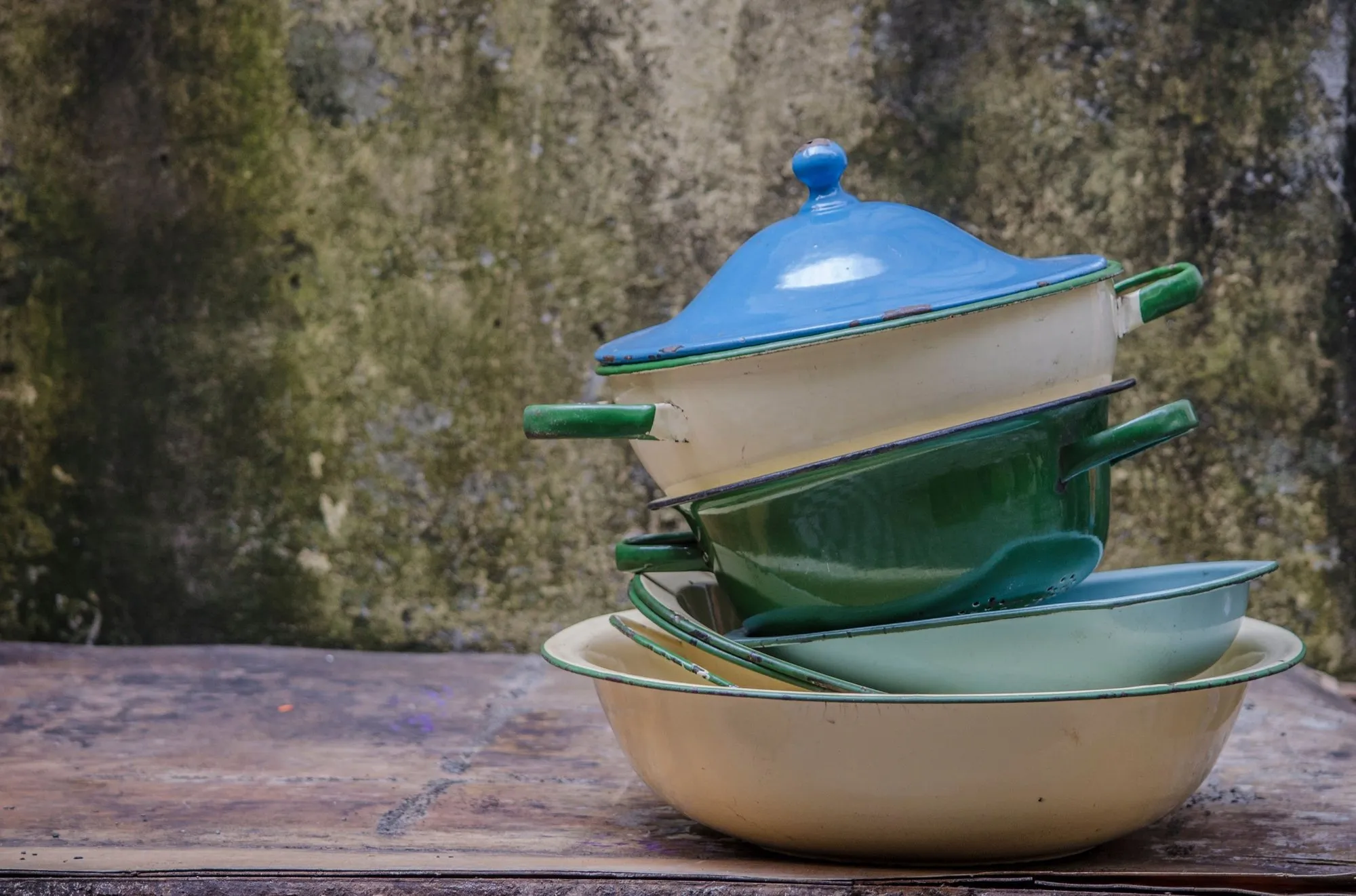
Enamel was the answer. It is glass, like a glaze, but fused to steel instead of clay. It goes on the hob, in the oven, in a rucksack and in the dishwasher. A good enamel pot outlives the person who bought it, which is why so many turn up at car-boot sales.
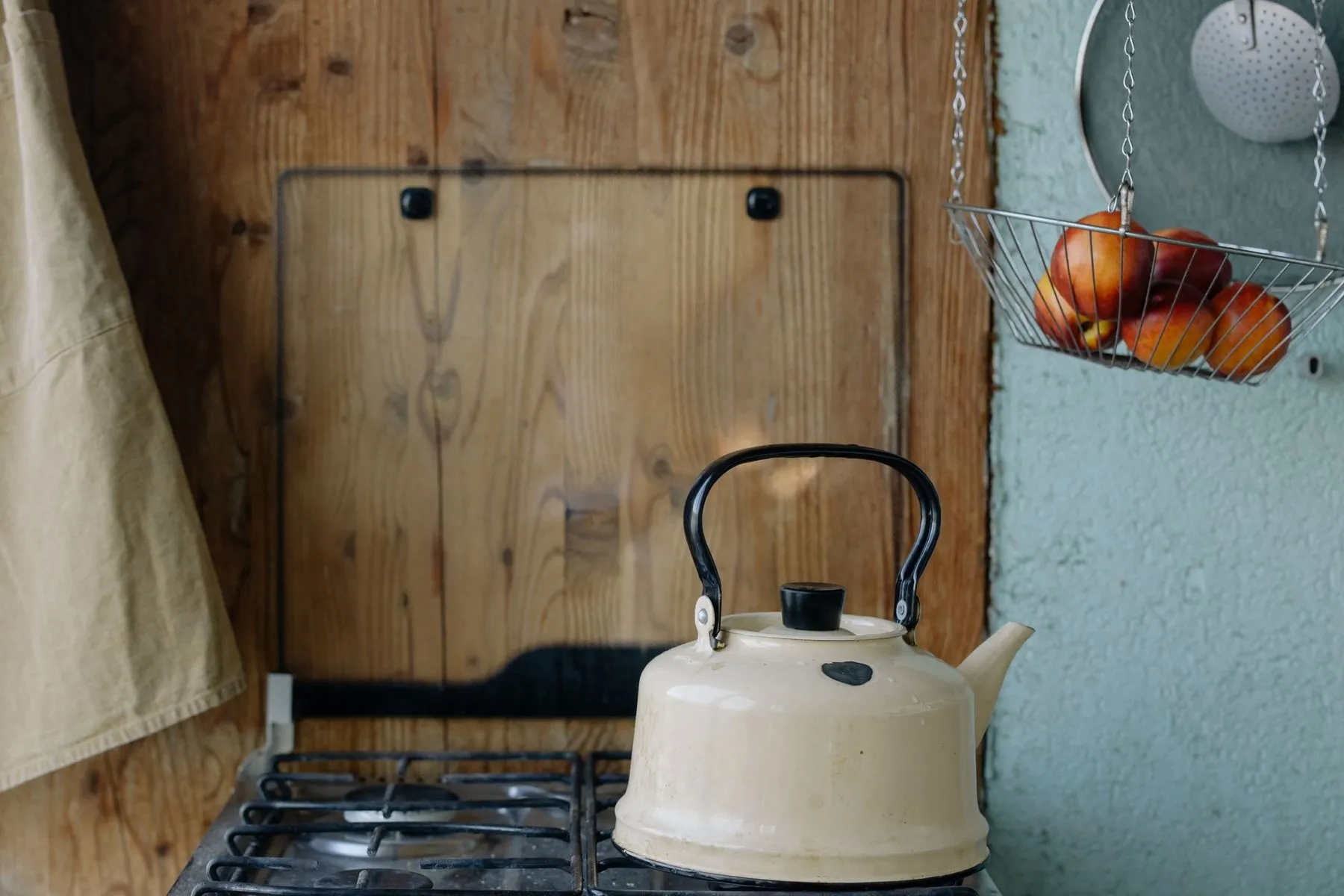
We sell only from this website and our workshop shop, so there is no retailer's margin in the price. That is how a hand-dipped kettle costs £48 and not £90.

From a sheet of steel to your kitchen in a week
Four stages, all under one roof.
Pressed
Cold-rolled steel from a mill in South Wales is pressed into shape on a 1960s press we rebuilt in 2016.
Dipped
Each piece is dipped by hand in the white ground coat, then in its colour. The drip line is wiped off by eye.
Fired
Two firings at 820 °C, about four minutes each. The glass flows and fuses to the steel.
Checked
Every piece is turned under a lamp. Anything with a pinhole or a thin rim goes to the seconds shelf.
9
people at the benches, including the two who started it.
3%
of pieces become seconds. We sell them at half price on the first Saturday of the month.
0 g
of plastic in our packaging since 2021. Paper wadding and recycled card only.
Come and see the kiln
The workshop shop is open Thursday to Saturday, 10am–4pm. Seconds go on sale the first Saturday of every month.